
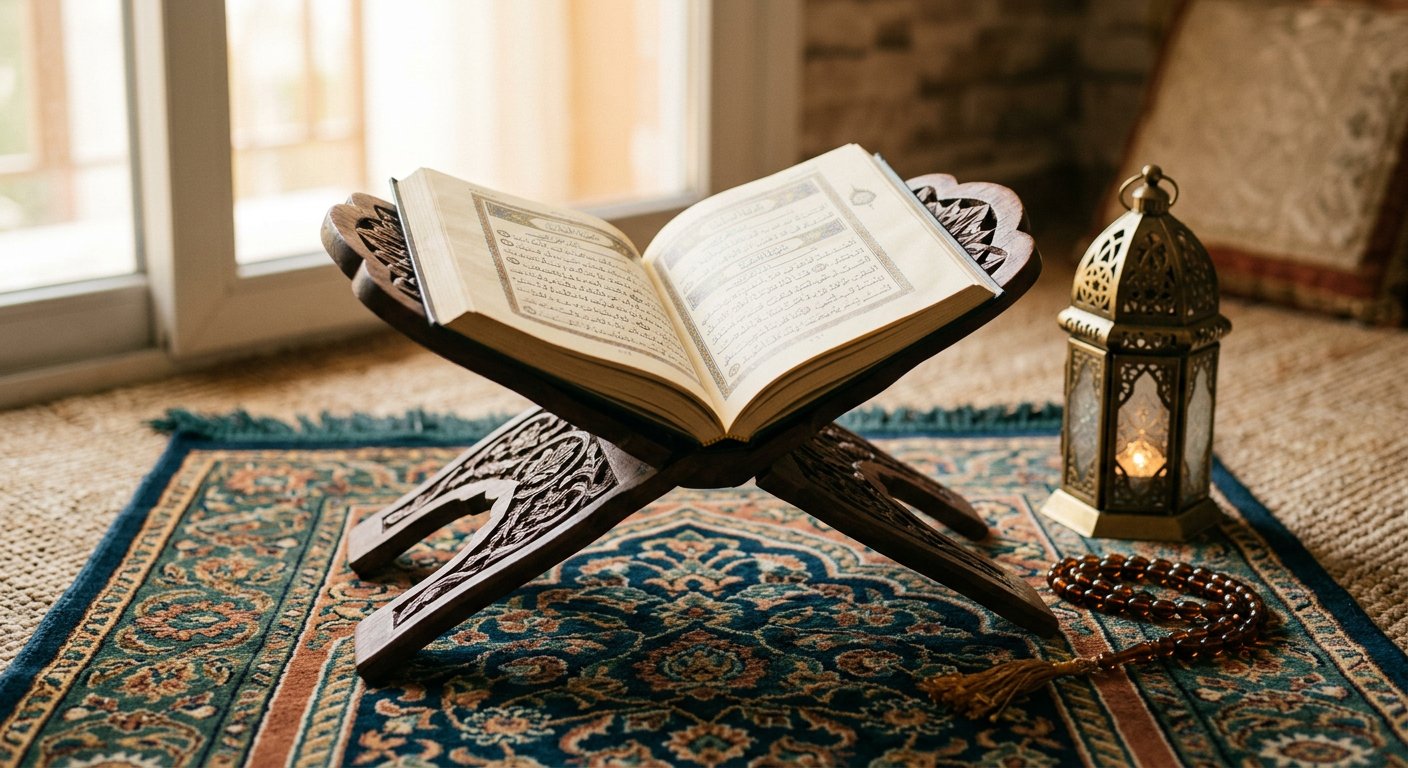
The Islamic (Hijri) calendar is a lunar calendar based on the cycles of the moon, marking time since the Prophet Muhammad's ﷺ migration (Hijrah) from Makkah to Madinah in 622 CE.
Why a Lunar Calendar?
Unlike the solar Gregorian calendar that most of the world uses, the Islamic calendar follows the moon. Allah says in the Quran: "Indeed, the number of months with Allah is twelve [lunar] months in the register of Allah [from] the day He created the heavens and the earth..." (Surah At-Tawbah 9:36)
The Prophet ﷺ also said: "The year is twelve months, four of which are sacred." (Sahih al-Bukhari)
The Four Sacred Months
Three of these are consecutive, and one stands alone:
- Dhul Qa'dah (11th month) — Standalone sacred month
- Dhul Hijjah (12th month) — Month of Hajj and Eid al-Adha
- Muharram (1st month) — The first sacred month, containing the Day of Ashura
- Rajab (7th month) — The sacred month containing the Isra and Mi'raj
During the sacred months, fighting was prohibited in pre-Islamic Arabia — a tradition that Islam honored and confirmed. Even today, these months carry spiritual significance for Muslims.
The Twelve Lunar Months
- Muharram (المحرّم) — The sacred first month; the Day of Ashura falls on the 10th
- Safar (صفر) — The second month; the Prophet ﷺ married Aisha (RA) in this month
- Rabi' al-Awwal (ربيع الأول) — The month of the Prophet's ﷺ birth and Prophethood
- Rabi' al-Thani (ربيع الثاني)
- Jumada al-Ula (جمادى الأولى)
- Jumada al-Thani (جمادى الثانية)
- Rajab (رجب) — Sacred month; the Isra and Mi'raj occurred in this month
- Sha'ban (شعبان) — The month before Ramadan; the Prophet ﷺ fasted frequently in this month
- Ramadan (رمضان) — The month of fasting, Quran, and Laylat al-Qadr
- Shawwal (شوال) — Eid al-Fitr is celebrated on the 1st of this month; fasting six days of Shawwal is recommended
- Dhul Qa'dah (ذو القعدة) — Sacred month
- Dhul Hijjah (ذو الحجة) — Sacred month of Hajj and Eid al-Adha
Origin of the Hijri Calendar
The Hijri calendar was established during the caliphate of Sayyidina Umar ibn al-Khattab (RA) in 638 CE (16 AH). The Companion suggested using a calendar to date documents and events, as the Muslim empire was expanding rapidly and a unified system was needed.
Umar (RA) consulted the Companions and they agreed to begin the calendar from the Prophet's ﷺ migration to Madinah — because this was the turning point that established the first Islamic state. The migration occurred in 622 CE, which was designated as Year 1 AH (Anno Hijri).
Significance of the Hijrah
The Hijrah was more than a physical journey — it represented the birth of an independent Muslim Ummah, where Islam could be practiced freely and the principles of justice, brotherhood, and worship could flourish. By starting the calendar from this event, Muslims remember:
- The sacrifices of the early Muslims
- The Prophet's ﷺ trust in Allah during the dangerous journey
- The companionship of Abu Bakr (RA) during the Hijrah
- The transformation of Madinah from a divided city into the first capital of Islam
- The establishment of the Constitution of Madinah — one of the first written constitutions in human history
Difference Between Hijri and Gregorian Calendars
The Hijri calendar is approximately 11 days shorter than the solar Gregorian calendar. A Hijri year is about 354 or 355 days, while a Gregorian year is 365 or 366 days. This is why:
- Islamic months move backward through the seasons — Ramadan falls about 11 days earlier each year (and sometimes twice in the same Gregorian year)
- Muslims experience fasting in summer, winter, and every season over a 33-year cycle
- The lunar calendar creates a universal experience for all Muslims worldwide
Wisdom of the Lunar Calendar: The lunar calendar reminds Muslims that time belongs to Allah. Unlike the solar calendar based on seasons, the lunar months rotate through every season — teaching patience, adaptability, and reliance on Allah's natural cycles.
Important Dates in the Hijri Calendar
- 1st Muharram: Islamic New Year
- 10th Muharram: Day of Ashura — Sunnah to fast this day
- 12th Rabi' al-Awwal: Birth of the Prophet ﷺ (though celebrating birthdays is Bid'ah)
- 27th Rajab: Isra and Mi'raj (some scholars say 27th, others differ)
- 15th Sha'ban: Mid-Sha'ban — some scholars recommend fasting this day
- 1st Ramadan: Beginning of the blessed month of fasting
- Last ten nights of Ramadan: Laylat al-Qadr — the Night of Power
- 1st Shawwal: Eid al-Fitr
- 8th-12th Dhul Hijjah: Days of Hajj and Eid al-Adha
Practical Application: Use the Hijri calendar to plan your religious observances, especially Ramadan, Eid celebrations, Hajj, and fasting the Sunnah days like Arafah and Ashura. Many apps and websites provide accurate Hijri dates for your location.